2026ರಲ್ಲಿ Machine Learning Roadmap — ಆರಂಭಿಕರಿಗಾಗಿ
Machine Learning ಶೂನ್ಯದಿಂದ job-ready ವರೆಗೆ ಕಲಿಯಲು ಸಂಪೂರ್ಣ, ಹಂತ-ಹಂತದ roadmap — ಕನ್ನಡದಲ್ಲಿ.

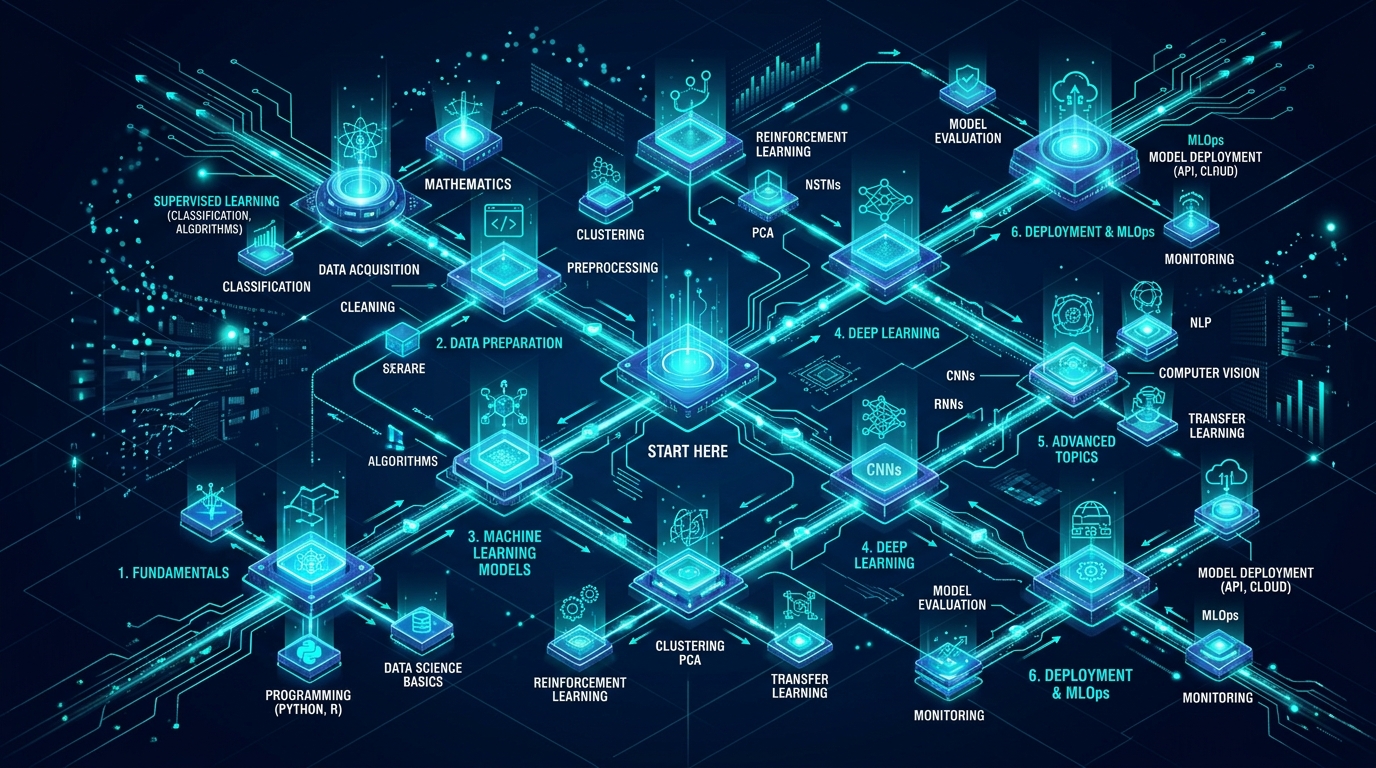
ವಿಷಯ ಪಟ್ಟಿ
Machine Learning ಇಂದು ತಂತ್ರಜ್ಞಾನ ಉದ್ಯಮದಲ್ಲಿ ಅತ್ಯಂತ ಬೇಡಿಕೆಯಿರುವ ಕೌಶಲ್ಯಗಳಲ್ಲೊಂದು. ಆದರೆ ಇಷ್ಟೊಂದು content ಲಭ್ಯವಿರುವಾಗ, ಏನು ಕಲಿಯಬೇಕು ಮತ್ತು ಯಾವ ಕ್ರಮದಲ್ಲಿ ಎಂದು ತಿಳಿಯುವುದೇ ಕಷ್ಟ.
ಈ roadmap ಆ ಸಮಸ್ಯೆ ಪರಿಹರಿಸುತ್ತದೆ.
Phase 1: ಅಡಿಪಾಯ (ತಿಂಗಳು 1–2)
1.1 Python Programming
ML ನಲ್ಲಿ ಎಲ್ಲವೂ Python ನಲ್ಲಿ ಬರೆಯಲಾಗಿದೆ. ಇವುಗಳಲ್ಲಿ ನಿರರ್ಗಳವಾಗಿರಬೇಕು:
- Data types: strings, integers, floats, booleans
- Data structures: lists, tuples, dictionaries, sets
- Control flow: if/else, for loops, while loops
- Functions ಮತ್ತು OOP basics
ಗುರಿ: ಮೂಲಭೂತ syntax ಬಗ್ಗೆ Google ಮಾಡದೆ Python programs ಬರೆಯಬಲ್ಲಿರಿ.
1.2 ML ಗಾಗಿ Mathematics
Linear Algebra:
- Vectors ಮತ್ತು matrices
- Matrix multiplication
- Dot products
Statistics & Probability:
- Mean, median, mode, standard deviation
- Probability basics
- Normal distribution
Calculus (Conceptual):
- Derivative ಎಂದರೇನು
- Gradient descent — ML ನ ಮೂಲ learning algorithm
Phase 2: Core ML Concepts (ತಿಂಗಳು 3)
ML Workflow
ಪ್ರತಿ ML project ಈ pipeline ಅನುಸರಿಸುತ್ತದೆ:
Data Collection → Data Cleaning → Feature Engineering →
Model Selection → Training → Evaluation → Deployment
Data cleaning ಮೇಲೆ ಹೆಚ್ಚು ಗಮನ ನೀಡಿ — real projects ನಲ್ಲಿ 60–70% ಸಮಯ ಇಲ್ಲಿಯೇ ಹೋಗುತ್ತದೆ.
ML ಬಗ್ಗೆ ತಿಳಿಯಬೇಕಾದ Algorithms
Regression (ಸಂಖ್ಯೆ predict ಮಾಡಲು):
- Linear Regression
- Ridge & Lasso Regression
Classification (ವರ್ಗ predict ಮಾಡಲು):
- Logistic Regression
- Decision Trees
- Random Forests
- Support Vector Machines
Clustering (ಗುಂಪು ಮಾಡಲು):
- K-Means
- DBSCAN
Phase 3: Python ML Libraries (ತಿಂಗಳು 4)
NumPy
import numpy as np

arr = np.array([1, 2, 3, 4, 5])
print(arr.mean(), arr.std(), arr.max())

# Matrix multiplication
A = np.random.randn(3, 4)
B = np.random.randn(4, 5)
C = np.dot(A, B)  # Result: (3, 5)
Pandas — Data Manipulation
import pandas as pd

df = pd.read_csv('data.csv')
print(df.head())
print(df.describe())
print(df.isnull().sum())

# Missing values handle
df = df.dropna()
scikit-learn — Machine Learning
from sklearn.model_selection import train_test_split
from sklearn.ensemble import RandomForestClassifier
from sklearn.metrics import accuracy_score

X_train, X_test, y_train, y_test = train_test_split(X, y, test_size=0.2)
model = RandomForestClassifier(n_estimators=100)
model.fit(X_train, y_train)

predictions = model.predict(X_test)
print(f"Accuracy: {accuracy_score(y_test, predictions):.2%}")
Phase 4: Projects (ತಿಂಗಳು 4–5)
ಈ ಕ್ರಮದಲ್ಲಿ projects ನಿರ್ಮಿಸಿ:
- Iris Flower Classification — classic beginner project
- Titanic Survival Prediction — data cleaning practice
- House Price Prediction — regression
- Customer Churn Prediction — business use case
- Sentiment Analysis — text classification
ಪ್ರತಿ project GitHub ನಲ್ಲಿ README ಸಹಿತ publish ಮಾಡಿ.
Phase 5: Deep Learning (ತಿಂಗಳು 5–6)
Classical ML ನಲ್ಲಿ comfortable ಆದ ನಂತರ:
- Neural Networks — ಹೇಗೆ ಕೆಲಸ ಮಾಡುತ್ತವೆ
- Backpropagation — networks ಹೇಗೆ ಕಲಿಯುತ್ತವೆ
- Activation Functions — ReLU, Sigmoid, Softmax
- CNN — image data ಗಾಗಿ
- RNN/LSTM — sequential data ಗಾಗಿ
TensorFlow/Keras (beginners ಗೆ) ಅಥವಾ PyTorch (industry standard) ಬಳಸಿ.
Roadmap ಸಾರಾಂಶ
ತಿಂಗಳು 1:   Python + Maths
ತಿಂಗಳು 2:   Core ML theory
ತಿಂಗಳು 3:   NumPy, Pandas, Matplotlib
ತಿಂಗಳು 4:   scikit-learn + 3 projects
ತಿಂಗಳು 5:   Deep Learning basics
ತಿಂಗಳು 6:   Specialisation + portfolio
ತಿಂಗಳು 7+:  Job applications
ಈ roadmap ಒಂದು ಮಾರ್ಗದರ್ಶಿ, ಕಟ್ಟುನಿಟ್ಟಾದ ನಿಯಮ ಅಲ್ಲ. ನಿಮ್ಮ background ಮೇಲೆ ವೇಗ ಸರಿಹೊಂದಿಸಿ.
ಮುಖ್ಯವಾದದ್ದು — ನಿಲ್ಲದೆ ಕಲಿಯಿರಿ.
ಟ್ಯಾಗ್ಗಳು

💬 Comments coming soon — connect via the social links above to share your thoughts.